
Do you get bail money back? 3 Crucial Facts 2024
When you or a loved one faces arrest, the question on your mind might be: do you get bail money back? Navigating the bail process, especially in Tennessee, can feel overwhelming. Here’s a quick snapshot to set your mind at ease:
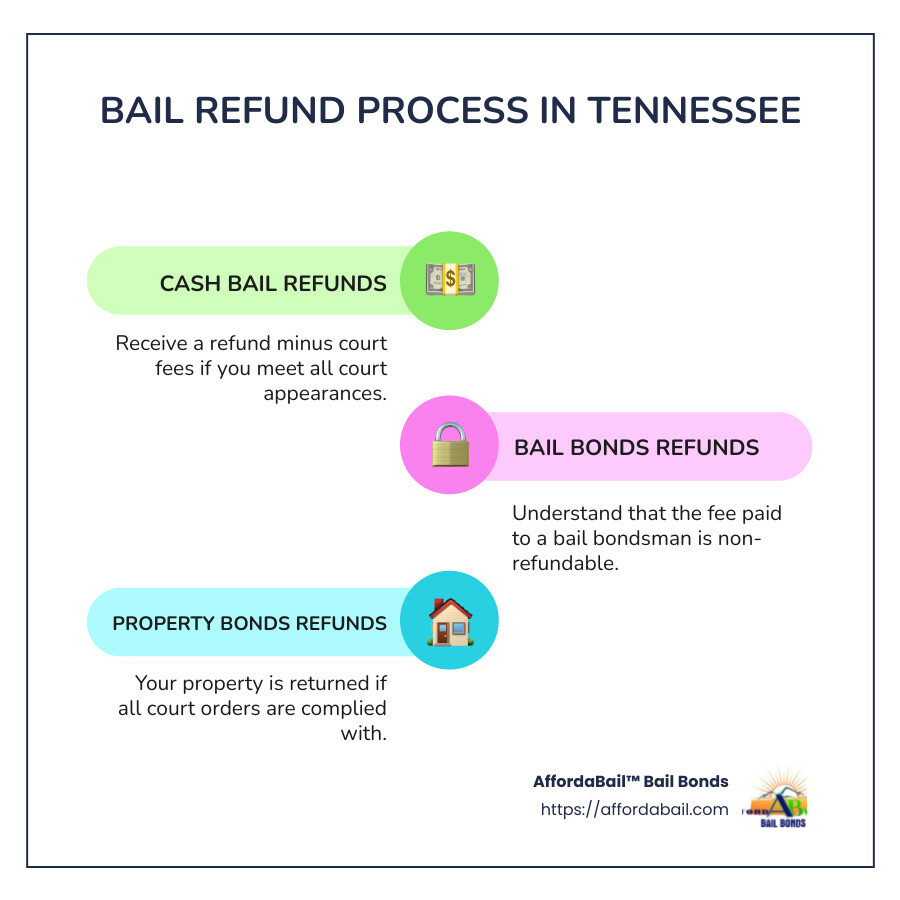
- Cash Bail: If all court appearances are met, you can expect a refund minus any court fees.
- Bail Bonds: The fee paid to a bail bondsman, like those at AffordaBail™, is non-refundable.
- Property Bonds: Assuming compliance with court orders, your property is safe and returned.
Understanding these basic points can help explain the complex processes involved in getting and refunding bail money in Tennessee.
Tennessee Bail Bonds Made Easy: With laws differing from state to state, it’s vital to grasp how bail works locally. In Tennessee, options like cash bonds, surety bonds (bail bonds), and property bonds are available, each with its own rules about refunds. Licensed bail bond agents, such as AffordaBail™, offer crucial support, guiding you 24/7 through the necessary steps for a smooth process.
By the end of this article, we aim to provide a clear path through the Tennessee bail system. We’ll explain how to manage bail costs and share tips on ensuring bail money is refundable whenever possible. Understanding these steps means less stress for you and your family.
Do you get bail money back terminology:
– bail vs bond
– how does bail work
What is Bail and How Does it Work?
When someone is arrested, bail is a way to get them out of jail while they wait for their court date. It’s a promise that the person will come back for their court appearances. If they do, they might get their bail money back, depending on the type of bail used.
Types of Bail
There are three main types of bail in Tennessee: cash bail, bail bonds, and property bonds.
-
Cash Bail: This is when the full bail amount is paid in cash. If the person attends all court dates, the cash bail is refunded, minus any court fees. It’s straightforward but requires having the full amount of cash upfront.

-
Bail Bonds: This option is for those who can’t afford the full cash bail. A bail bondsman, like those at AffordaBail™, pays the bail for a fee. This fee is typically 10% of the bail amount and is non-refundable, even if the person shows up for all court dates.
-
Property Bonds: Instead of cash, property is used as collateral. If the person follows all court orders, the property is returned. If not, the court can seize the property.
Setting Bail Amount
The amount of bail is set by a judge and can vary based on several factors. Here’s how it works:
-
Judge’s Role: The judge decides whether bail is allowed and sets the amount. They look at how serious the crime is, the person’s criminal hist