
Columbia Bail Bonds: Top Guide for 2024 Success
Navigating Columbia Bail Bonds: A Crucial Guide
When a loved one is arrested, securing their release quickly becomes a priority. Columbia Bail Bonds provide a way to temporarily release defendants from jail, allowing them to prepare for court while maintaining some normalcy. Here’s a quick rundown of what you need to know:
- Purpose: A bail bond is a financial assurance that the defendant will appear in court. It’s an agreement between the accused, a bail bondsman, and the court.
- Cost: Typically, you pay 10% of the bail amount to the bail bondsman as a non-refundable fee.
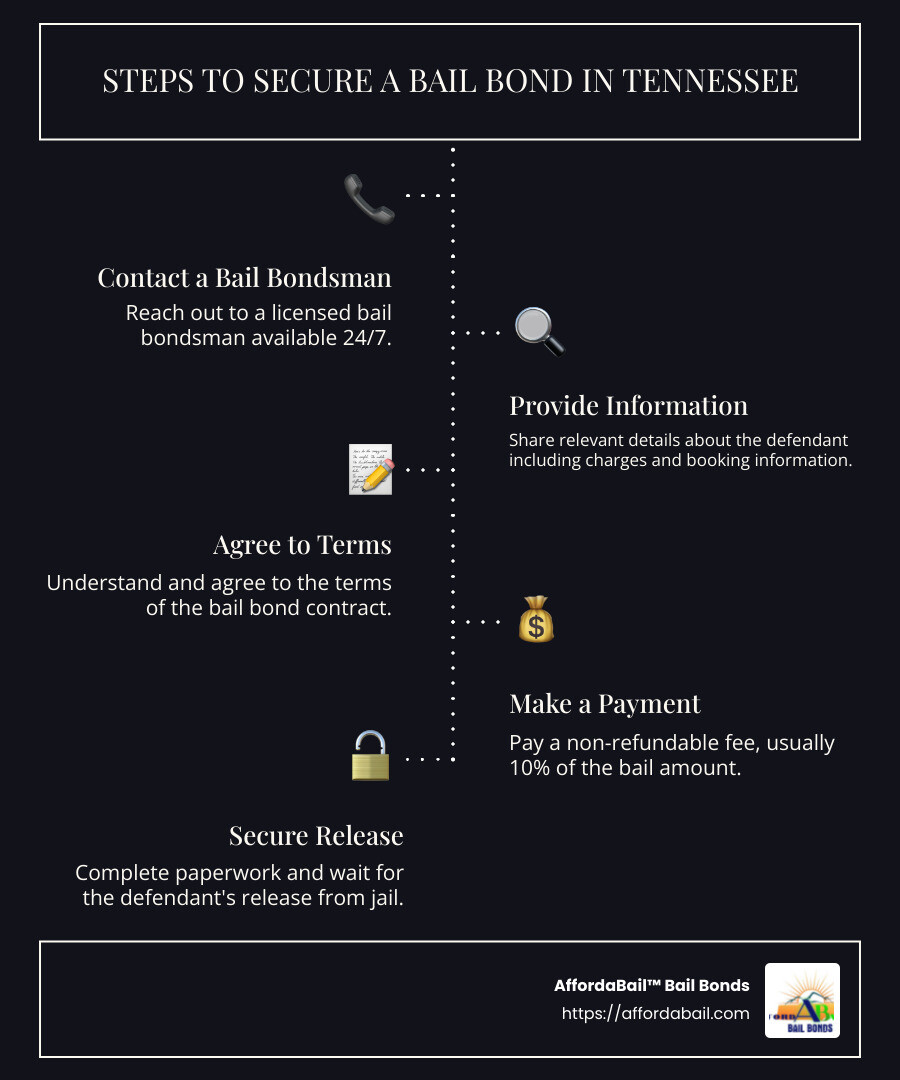
- Process: Start by contacting a reliable bail bondsman, provide necessary information, and settle the fee to initiate the release process.
Quick action is key to minimizing time in detention. Affordable options and 24/7 support from a trusted bail bondsman can make a significant difference in navigating these stressful circumstances smoothly. Whether you’re in Columbia, Nashville, or anywhere in Tennessee, an experienced agent is available to assist.
Below is a detailed infographic to help visualize the bail bonds process in Tennessee:
Understanding Bail Bonds
Navigating Columbia Bail Bonds can be daunting if you’re unfamiliar with the process. Let’s break it down into simple terms to help you understand what a bail bond is and how it works.
What is a Bail Bond?
A bail bond is essentially a financial guarantee. It ensures that a defendant will appear in court as required. When someone is arrested, the court sets a bail amount. This amount acts as a security deposit to encourage the defendant to return for their trial.
If the defendant can’t pay the full bail amount, they can turn to a bail bondsman. The bail bondsman pays the bail on behalf of the defendant, in exchange for a fee, usually 10% of the total bail amount. This fee is non-refundable.
How Bail Bonds Work
The Role of the Bail Bondsman
A bail bondsman is an agent who provides the financial assurance needed to secure a defendant’s temporary release from jail. They are responsible for ensuring the defendant attends all court appearances. If the defendant skips court, the bondsman must pay the full bail amount to the court.
Booking Process
When someone is arrested, they go through a booking process. This involves taking fingerprints, photographs, and collecting personal information. The defendant is then held in jail until a bail hearing.

Bail Hearing
At the bail hearing, a judge determines the bail amount based on several factors, including:
- Severity of the crime
- Defendant’s flight risk
- Criminal history
The judge’s decision can significantly impact the defendant’s ability to secure release.
Setting Bail Amount
Once the bail amount is set, the defendant can either pay the full amount or use a bail bondsman. The bail bondsman charges a fee (typically 10%) and may require collateral, but not always. This arrangement allows the defendant to be released while awaiting trial.