
Cash Bond Guide: Top Benefits & Drawbacks in 2024
The Importance of Cash Bonds in Tennessee
Cash bond is a term that often surfaces in stressful times, like when a loved one is unexpectedly arrested. Simply put, a cash bond involves paying the full bail amount in cash, ensuring the release of the detained person while they await trial. This type of bond is straightforward: pay up and stay released.
Here’s what you need to know right away:
- Definition: A cash bond is the total bail amount paid in cash upfront.
- Purpose: It acts as collateral that guarantees the defendant’s appearance at all court trials.
- Process: Easy—pay the full cash amount set by the court and your loved one is released.
In Tennessee, especially in busy areas like Nashville or Memphis, having access to reliable bail bond services is critical. AffordaBail™ Bail Bonds makes the process accessible by offering affordable and fast services around the clock, alleviating the stress of unexpected arrests.
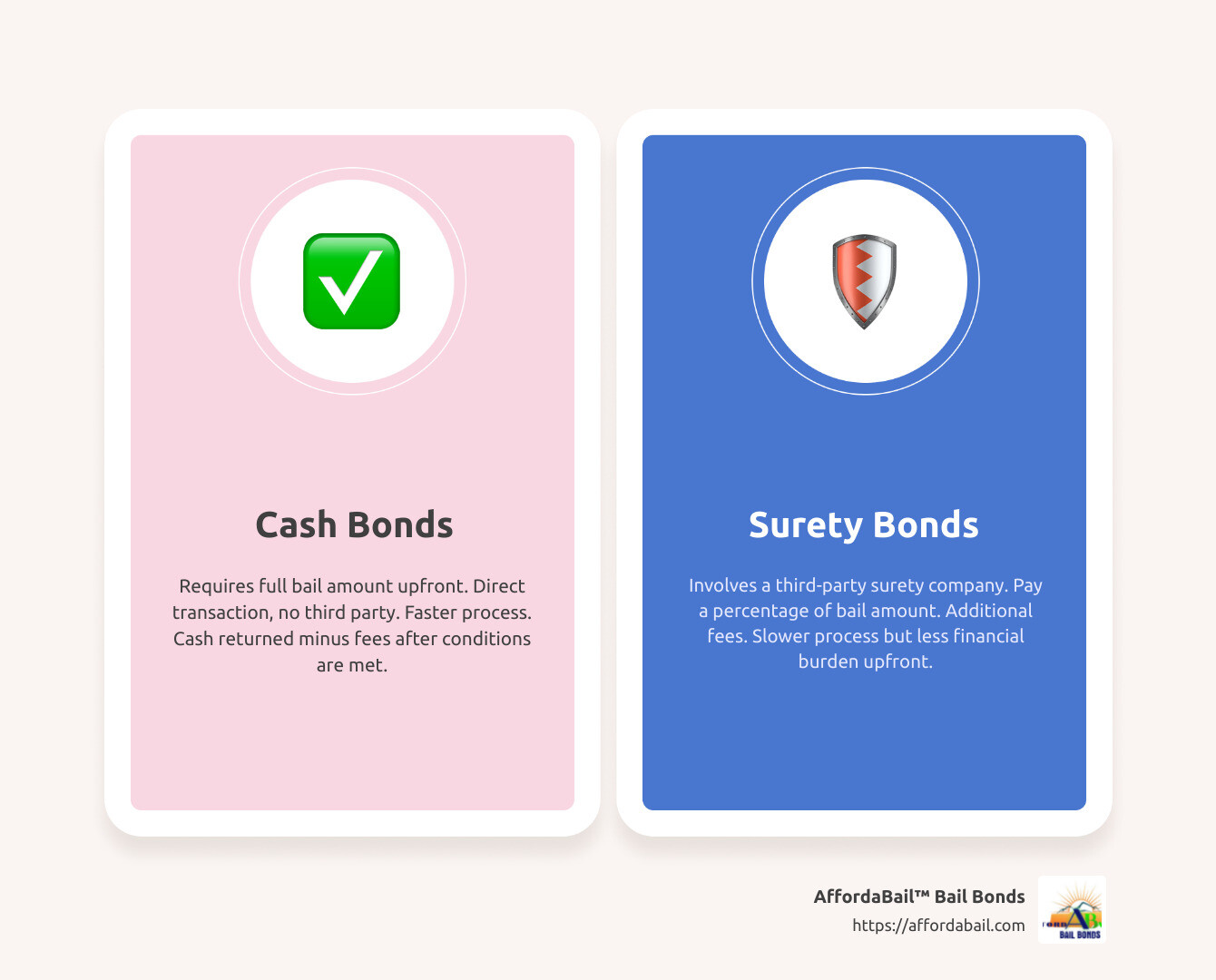
Why It Matters: Cash bonds allow for direct financial transactions without involving third parties, which can often save additional fees. The process, while financially demanding, is usually quicker compared to surety bonds, and once all conditions are met, the cash is returned—minus any court fees. For families in a bind, quick and local support is crucial.
Glossary for cash bond:
– bail vs bond
– do you get bail money back
– how does bail work
What is a Cash Bond?
A cash bond is the full bail amount paid in cash to secure a defendant’s release from jail. This is a straightforward way to ensure that the person accused of a crime will attend all their court dates. The cash serves as collateral, and once the trial is over, the money is returned, minus any court fees.
How to Pay a Cash Bond
Paying a cash bond in Tennessee is a simple process. You can pay it using cash, a cashier’s check, or even a debit or credit card, depending on the local district’s accepted methods.
- Cash: The most direct method. If the bail amount is $10,000 or more, you’ll need to fill out an IRS form due to federal regulations.
- Cashier’s Check: Make it payable to the Clerk’s Office of the U.S. District Court. This method is secure and often preferred for large amounts.
- Credit/Debit Card: Some districts allow card payments, but check for any administrative fees.
Once the payment is processed, you’ll receive a receipt. Keep this safe, as it’s crucial for getting your money back after the court proceedings.

Benefits and Drawbacks of Cash Bonds
Advantages:
- Quick Release: Paying in cash can speed up the release process since there is no need to involve a third party, like a bail bondsman.
- Refundable: If the defendant attends all court dates and complies with the court’s conditions, the full amount (minus fees) is refunded.
Disadvantages:
- High Upfront Cost: The biggest hurdle is the need for a large sum of money upfront, which can be financially s